Showing posts with label outreach. Show all posts

Sunday, November 11, 2012

What is most important to outreach? Just showing up.

In my prior wrap-up over the Chattanooga MOX hearing, one of the key takeaway lessons for nuclear outreach I found while helping to organize students attending the NNSA hearing on surplus weapons-grade plutonium disposition in MOX fuel is this: Showing up matters.

In fact, there's an old Woody Allen quote circulating around which summarizes this best:
80% of success is just showing up.
In a later interview, Allen would extend upon his prior quip:
I made the statement years ago which is often quoted that 80 percent of life is showing up. People used to always say to me that they wanted to write a play, they wanted to write a movie, they wanted to write a novel, and the couple of people that did it were 80 percent of the way to having something happen. All the other people struck out without ever getting that pack. They couldn’t do it, that’s why they don’t accomplish a thing, they don’t do the thing, so once you do it, if you actually write your film script, or write your novel, you are more than half way towards something good happening. So that I was say my biggest life lesson that has worked. All others have failed me.
Why bring all of this up again? Namely because I think a recent outreach case organized by Meredith Angwin (of Yes Vermont Yankee) and Howard Shaffer at a recent public hearing in support of the Vermont Yankee reactor so perfectly reinforces this point. Angwin and Shaffer managed to organize a crowd of supporters of the plant for a public hearing on its renewal for a Certificate of Public Good (required for the plant to continue to do business in the state - this in spite of the fact that the actual safety license to operate is controlled exclusively by the NRC). In fact, they managed to do this and then some, with supporters outnumbering opponents three-to-one.

The result? News coverage of the event represents their side and their message in addition to the opponents. They (VY supporters) controlled the tone of the meeting, keeping it civil and respectful. (This is in marked contrast to some meetings where Angwin reports being hopelessly outnumbered - and thus where the tone is decidedly different).

The exact same thing was seen when one contrasts the meeting coverage of NNSA hearings in Chattanooga versus meetings later that week in Decatur, AL (closer to the Brown's Ferry reactor, a TVA candidate site for MOX). With nuclear supporters absent, the "public" consisted of professional anti-nuclear activists going from meeting to meeting repeating the same (debunked) arguments. (Notice that certain individuals, like Tom Clements of the Alliance for Nuclear Accountability, show up multiple times). The tone of the stories reflects the absence of supporters - as a result, opponents have the narrative to themselves - they are the public. When supporters were present (as in Chattanooga), it is reported as "spirited debate" - the existence of a pro-nuclear side is acknowledged.

In other words, the media won't come find you if you're not there. What makes up much of reporting, particularly at the local level like this, is storytelling. When one side is absent, their story doesn't get told. Reporters aren't going to seek it out - in fact, they're unlikely to even acknowledge its existence. This is why showing up matters so much. Ultimately, the way most of the public will learn about issues like MOX (or Vermont Yankee, etc.) will not be through direct contact with opponents or supporters, but rather through reported accounts in the media - which means if one side doesn't show up, the public simply will not know about it. It's simply not part of the narrative.


As an aside, I am currently at the ANS Winter Meeting in San Diego, CA - do say hello if you catch me sometime while I'm there. (I already had the pleasure of meeting Will Davis of Atomic Power Review for the first time last night, and I'm hoping to run into more folks from the online community). This probably explains my itching to emphasize the importance of outreach so much, of course - namely because I'm also going to be talking about some of these same important lessons with other nuclear professionals while I'm here.

Friday, September 14, 2012

Mixing it up over MOX - a wrapup from Chattanooga

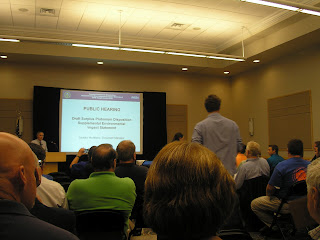
Crowd at the MOX hearingTuesday's meeting in Chattanooga over the draft Supplemental Environmental Impact Statement (SEIS)  over potential plans by TVA to use MOX fuel fabricated from surplus weapons plutonium had no shortage of passion. The meeting drew a packed house of MOX supporters and professional anti-nuclear activists ("professional" in the sense that these individuals clearly make a career out of attending such hearings).

Surprisingly absent however was any evidence of nuclear zombies; while the opponents employed some degree of necromancy in their arguments, no "nuclear zombies" were spotted at the meeting. (To which I wryly observed during the meeting, "All that zombie defense training for nothing...")

For those who missed it, I did a bit of live-blogging at the ANS Nuclear Cafe as well as live-tweeting the meeting (as @sskutnik, under the tag #MOXchat - and #MOXsnark as my snarkiness level progressively increased throughout the meeting...) Meredith Angwin of Yes Vermont Yankee was following the meeting via Twitter and has already posted her thoughts; I've been a bit delayed up until now (such is the life of a professor...), but I wanted to get in my impressions from the meeting.
UTK ANS students

Strong turnout

We had an extremely healthy contingent of students in attending, both from the University of Tennessee (where we had a little over 20 overall) as well as Chattanooga State's local ANS section (as seen in the bright blue and orange shirts in many pictures). A great deal of credit for this goes to Laura Scheele, the Outreach and Public Relations director for ANS national, who coordinated with both the UTK and Chattanooga State sections as well as organizing a welcome hospitality room (always popular with students!)

Also in attendance was Suzy Hobbs-Baker of PopAtomic Studios, who put together some very cool pro-nuclear signs. (One anti-nuclear activist who wandered into the hospitality room as Suzy was putting together some of her signs before the meeting rolled her eyes and said, "You have got to be kidding." Whimsy, it would appear, is lost upon the opposition. Such a lack of whimsy of course did not stop her from helping herself to some cookies courtesy of ANS.)


No zombies, but zombie arguments

As I noted above, there was a surprising absence of zombies at the Chattanooga hearing; we speculated as to whether the budding thespians had caught wind of our plans to organize on the hearing and decided to head off to greener pastures (or at the very least, softer targets).

In a rare, refreshing display of honesty, one housewife-cum-activist (this being pretty much her own self-description: "My husband pays the bills, which allows me to do this full-time"), while reading off of a notecard of pre-prepared talking points, admitted, "I don't really understand this, but I'm going to read it anyway..." There were numerous "technical" (speaking very generously) arguments of dubious merit pertaining to MOX fuel - they could be summarized essentially as follows:

  • MOX fuel burns (thermally) hotter, so it's more dangerous
  • These reactors "weren't designed" for MOX fuel
  • MOX fuel is ill-understood and experimental
  • MOX fuel with weapons-grade plutonium behaves differently than reactor-grade plutonium
  • MOX fuel leads to much more rapid neutron embrittlement of reactor pressure vessels
Some of these arguments I've handled before, but let's go through them again. 

Thermal output


As to the thermal output - indeed plutonium does release somewhat more energy than uranium upon fission. However, the reactors are being run at the same thermal output - which is controlled the same way we control uranium-only cores: with chemical shims (like soluble boron), burnable poison rods, and control rods - all of which keep the total temperature of the reactor the same as before by controlling the rate of fission.

Reactor physics of MOX fuel


The next three arguments essential come under the same umbrella - the myth that MOX fuel is somehow new and ill-understood. MOX fuel itself has been used for decades around the world in countries that reprocess used nuclear fuel, so the idea that it's somehow ill-understood is clearly false on face. 

Beyond this, many of the opponents arguments came from half-complete understandings of how reactors work; it was particularly apparent that they were being fed cherry-picked half-truths to convey a sense of technical credibility to their arguments. For example, opponents argued that MOX fuel makes the reactor more difficult to control. In a limited sense, this is true; plutonium has about 1/3 the fraction of delayed neutrons (~0.2%) as U-235 (~0.64%). 

[Aside: In reactor theory, neutrons come in two forms - "delayed neutrons," which come from fission products or decay products (on the order of a few milliseconds to a few minutes after fission), and "prompt neutrons," which are the neutrons released at fission. Reactors are typically run as "delayed critical" - meaning that the delayed neutrons are the component which keeps the chain reaction going; the reactor is in fact subcritical (not self-sustaining) from prompt neutrons alone. The existence of delayed neutrons is what allows for a reactor to be safely controlled, namely by allowing for smooth, easily controlled changes in reactor power.]

Here's the problem with the opponents' argument; nobody is proposing to run a full core solely upon plutonium fuel. Rather, the TVA proposal would, at a maximum be looking at a 40% core of MOX fuel, ramping up from an initial loading of around 4%. Further, there is of course an ongoing trend with nuclear opponents, that somehow there is a completely non-existence of an engineering discipline. A key issue to stress here is that before any fuel assembly is loaded into a reactor, an inordinate amount of engineering work is done to know just how the fuel will behave to ensure it will be done safely. No one is simply doing engineering by the seat of their pants, contrary to the beliefs of some.

Once the argument that MOX fuel is somehow "experimental" is knocked down, opponents quickly come back with a new variant - that somehow plutonium of weapons-grade variety (i.e., with a Pu-239 content over 90%) behaves substantially differently than that of reactor grade origin (where Pu-239 is about 55-70%, with about 20-25% Pu-240).

Pu composition by reactor type

With plutonium, odd-numbered species (Pu-239, Pu-241) are "fissile," meaning they will fission with thermal neutrons (i.e., the kind which exist in a light-water reactor). Even-numbered plutonium species will not; they typically absorb neutrons to become odd-numbered plutonium species (e.g., Pu-240 will become Pu-241), meaning these species have a net negative reactive worth (i.e., they parasitically absorb neutrons).

However, once again - these are things which are well-understood from an engineering perspective; the amount of plutonium in the MOX rod is determined by how much "reactive worth" is necessary. One of the students who spoke (and was later quoted by the Times-Free Press) has actually studied this exact issue (differences between weapons-grade and reactor grade plutonium for reactor fuel) and found minimal differences in reactor behavior. In other words, this is most certainly not some "experimental" fuel never tried before - all of this is well-understood physics.

Everyone's a reactor engineer...


The same goes for whether reactors are "designed" for MOX fuel; reactors are designed to remove efficiently remove heat from fuel rods and contain radioactivity. Reactor cores are designed to distribute fuel assemblies such that the rate of fission (and subsequently reactor power) is as evenly distributed as possible, with minimal peaking. Thus, the argument that somehow reactors are not "designed" for MOX-loaded cores run at the licensed and designed reactor power is utter nonsense, based upon a total misunderstanding of how reactors are designed and operated.

Finally, one of the most bizarre and self-contradictory arguments was the idea that MOX fuel will uniquely lead to accelerated materials issues with reactor pressure vessels - i.e., neutron embrittlement. Again, an argument based upon a half-truth. The average number of neutrons released in fission by plutonium is again higher than uranium (a quantity known as "nu-bar"; nu-bar for Pu-239 is about 2.98, compared to 2.6 for U-235, about a 15% difference). However, the actual quantity of interest - the neutron flux (i.e., the number of neutrons actually flying around in the reactor) is directly proportional to the rate of fission - itself proportional to the reactor power. In other words, if the reactor power is held constant, all other things being equal the neutron flux will also be about the same. (There are some minor differences here, getting deeper into the technical details, but the end result is that the net difference in neutron flux basically ends up being a wash.) In other words, the argument that somehow plutonium-based fuels will somehow uniquely lead to accelerated neutron embrittlement is utterly bogus - completely notwithstanding the fact that NRC regulations require regular sampling of reactor pressure vessel materials (a "coupon" is taken from the vessel itself and tested for properties of embrittlement).

...or an economist


Not surprisingly, many armchair economists were also present among the opponents, with several pointing out the fact that the disposal of surplus plutonium in MOX fuel costs more than vitrification and disposal in a geologic repository (in this case, likely WIPP in New Mexico) in glass logs. A response to this - repeatedly brought up by myself and others present is that fissioning the plutonium is the only way it can ultimately be permanently destroyed. (This perhaps most brilliantly summarized by Dr. Howard Hall, who noted that "as a chemist, the most difficult thing for me to do is to put an atom back together after it's been fissioned.") Opponents also neglect a few key issues as well - the first and most important of which is that we have a standing agreement with Russia to destroy this plutonium in MOX fuel, namely because of Russian concerns about future retrievability in glass log form. (While the plutonium is rendered far more inaccessible in glass log form compared to its original metal pit form, it is clearly not impossible even with present technology to recover; by contrast, plutonium fissioned in MOX fuel is both destroyed, with the remaining material both contaminated with "nuisance" species like Pu-240 and Pu-242 as well as being trapped in a form which would need to be processed, while being protected by a lethal radiation field.)

Additionally neglected is the fact that the DOE has already made the decision to go the MOX route and has already invested considerable resources in making this happen, meaning any savings argument is moot; the meeting at this point involves TVA's decision to accept the MOX fuel for reactors. (Topical limitations did not stop MOX opponents from airing a laundry list of complaints against nuclear energy writ large, particularly with respect to TVA.) However, even assuming abandoning the MOX program was under consideration (neglecting technical concerns and focusing strictly upon the economic argument being presented), given the funds already committed to the MOX fabrication facility, we are well past the point where vitrification (a technically inferior solution) would even save money on the balance.

Of course, economics was not always the strong suit of opponents; a particularly amusing moment of the evening was when one opponent began his speech indicating how he hadn't paid an electric bill in over two years thanks to his home solar panels, then proceeded to preface an argument against the relative economics of MOX by saying, "As a TVA ratepayer..." It was quite clear that the meaning of "ratepayer" wasn't quite understood.

The importance of being nice

One of the most surprising things to me about the overall tone of the meeting was the general air of civility in the affair. Perhaps my expectations had been set too low on the basis of some of the zombie theatrics of Greenpeace types at prior TVA hearings (not to mention some of the horror stories Meredith Angwin has reported in connection to Vermont Yankee meetings), but overall MOX proponents and opponents alike were polite and respectful of one another. (This did not prevent the odd condescending remark from the protestors - one of the more personally enraging ones went along the lines of, "I'm glad to see all the students here tonight - but we don't need cheerleaders for MOX here, we need solutions." As if the years of hard work students put into their degree programs is irrelevant.)

One thing I stressed to students beforehand was the sage advice I took to heart from Meredith: be nice. (And if you can, bring friends.) More importantly, I tried to stress the importance of being courteous and respectful even in the face of opponents who at times took a hostile, dismissive, or even condescending tone. (At several occasions in the evening Angwin was referred to as our "patron saint" of pro-nuclear activism...) [Edit: Meredith notes that her frequent co-blogger / co-activist Howard Shaffer is even more active; I would happily amend to note the two as "co-patron saints" of nuclear activism...]

A particularly interesting facet of the meeting was in how one could readily identify MOX opponents before they even got to their arguments - solely by their tone of voice. In nearly every case, opponents would grow progressively louder as they spoke, some nearly shouting by the end (despite the presence of a microphone and room small enough that none of this was necessary).

That being said, each side respectfully allowed the other to speak - there were no disruptions or booing; generally speaking, there was even polite applause for each speaker despite whose side they represented. (An interesting finish to the story; when we wrapped up and headed out to dinner afterwards, the opponents ended up at the same restaurant, sitting at a table right next to us. While there was some mildly belligerent exchanges between one opponent and one of our students, generally speaking both sides were again polite and respectful to one another.)

Showing up matters

Lest anyone doubt the impact of knowledgable people simply showing up at meetings like this, I offer the following exercise in compare & contrast: Take a look at the coverage of the MOX hearing in Chattanooga (attended by an overwhelming number of ANS local section members from the University of Tennessee and Chattanooga State) versus the hearing on Thursday in Decatur, Alabama (near the Brown's Ferry reactor, one of the proposed TVA sites for burning MOX fuel). (For further contrast, have a look at the before and after reporting of the Chattanooga meeting as well).

The distinction in coverage when knowledgable nuclear advocates are present could not be more clear; in their absence, a small caravan of nuclear opponents traveling from meeting to meeting are allowed to speak unopposed as the singular voice of "the public." (Take a look at the articles and see if you can't spot some repeated names, for example.) There is little question in the Decatur coverage whether a contingent of the public exists who supports the program (apparently, they don't) - instead, opponents have been allowed to freely carry the day, completely unchecked.

Without trying to belabor the point too much: showing up matters. Reporters have no technical basis to evaluate the questionable claims of nuclear opponents (which really, the MOX opponents unabashedly represented); nor do reporters have any reason to seek out the existence of an opposing view when it is absent from public forums such as these. By contrast, when knowledgable individuals show up to these meetings, particularly in large numbers, their presence simply cannot be ignored - even if their numbers may be underreported. (The Chattanooga Times-Free Press reporter indicated about a dozen students were present; by my count, we had about two dozen from the University of Tennessee alone in two vans, not even counting the over two dozen from Chattanooga State.)

Final thoughts

Something to stress here in all of this - and again, something I made sure to emphasize with the students coming on their own time despite busy class schedules - is that in addition to the simple importance of speaking out at events like this (something I feel is an ethical obligation of nuclear professionals), one of the most important aspects here is to have fun. Outreach events like this can be stressful, especially with opponents ready to label students as simple shills or puppets of the "nuclear corporatocracy" to use one opponent's terms. Some of this came from having some fun with opponents' catchphrases - "Don't fall into the MOX pit!" and "Are you cheerleading or finding solutions here?" were repeated more than once in humorous fashion afterwards.

Events like this fulfill a vital part of the role of organizations like ANS to inform the public such that decisions are made on the basis of facts and not simply demagoguery, but that also doesn't mean that they can't also be a fun way for students and professionals to get together to share their passion for technology they see as vitally important for society's future.

Monday, September 10, 2012

Wading into the "nuclear zombie" horde

Tomorrow evening, the NNSA will be hosting a public meeting concerning its Supplemental Environmental Impact Statement on the disposition of surplus weapons-grade plutonium (WGPu) as mixed-oxide ("MOX") fuel for consumption in power reactors.

This is not a new policy - the decision to dispose of the surplus weapons material was put into place during negotiations with the Russians which took place during the Clinton Administration. The goal was quite simple: with the Cold War at an end, both countries had far greater stocks of weapons material than reasonably necessary for defense, and disposing of this material was determined to be a national security priority. In particular, both the U.S. and the Russians have agreed to dispose of 34 metric tons (about 75,000 pounds) of surplus bomb material.

Such an agreement is similar in form to the "Megatons to Megawatts" program now winding down, in which surplus highly-enriched uranium (HEU) formerly for weapons was down-blended into low-enriched uranium (LEU) for reactor fuel and permanently destroyed.

Scrambled eggs / plutonium
The NNSA proposal works along the same lines - take what is currently a weapons-grade asset and blend it down (in this case, convert the plutonium into an oxide powder and blend it to about a 4% mixture with uranium) and then burn it in reactors. The advantage to this approach is relatively straightforward: by burning the plutonium in reactors, the plutonium isotopic makeup becomes "scrambled" - basically rendering it useless for weapons, even if it were ever recovered from the spent MOX fuel. Further, the irradiated fuel adds a second physical barrier to theft and diversion - namely that now this material is now trapped inside a highly radioactive fuel rod. (The treaty agreement likewise forbids the two countries from reprocessing the spent MOX fuel for several decades.)

So who would object to what sounds like a sensible application of the "swords to plowshares" concept?

Zombies.

Specifically, "nuclear zombies." Greenpeace and other anti-nuclear activists, in continuing their slow decline into generalized misanthropy over any stated concern for the environment, have come out in force against the NNSA proposal, going so far as to set up shop in Chattanooga. Their particular M.O. in this has been a series of "nuclear zombie" theatrics - starting with a TVA hearing on completing the mothballed reactor project at Watts Barr Unit 2. The anti-nuclear critics leaped upon the construction restart as reviving a "zombie" reactor build (once dead, now undead - yes, clever there folks) and have been working with the meme since.

In keeping with the theme, I'll be leading a contingent of trained nuclear engineering students zombie hunters  from the University of Tennessee down to the public meeting tomorrow both as a show of support and more importantly as a resource in trained experts who can sort the facts from the theatrics.

As always though with zombies, it's important to remember the most important rule of dealing with zombies: Always remember the double-tap. As we prepare for the charge into the zombie horde, it's thus useful to put down a few of the "living dead" arguments out there which seemingly seem to lumber on from beyond the grave. As a good companion piece, I also highly recommend Dan Yurman's full frontal assault on the zombie horde.

Zombie argument #1: MOX fuel is unsafe

Several countries, including France and Japan, already use MOX fuel in their reactors. This plutonium comes from recycling the plutonium that is built up in uranium fuel as reactors are operated. (Thus, to emphasize: plutonium in reactors is not a foreign concept - in the course of regular operations, plutonium is built up and burned within the fuel. In fact, near the end of a fuel bundle's lifetime, much of the energy produced from fission comes from the fissioning of plutonium itself, in addition to the depleting fissile uranium in the fuel).

Plutonium fuel does burn a bit "hotter" (fission releases a nominally larger amount of energy for plutonium compared to uranium), but as Yurman points out in the above article, this is relatively similar to how a wood-burning stove works. Certain woods burn hotter (think hardwoods); but control of the reactor power and temperature is governed by many devices beyond the fuel, including burnable poisons and control rods which regulate the reaction rate. The goal of MOX fuel is essentially to use it as a replacement for ordinary uranium fuel - meaning the reactors are to run at the same power level as before. This is a well-understood concept.

Further, the MOX fuel would not compose more than a fraction of the core loading. Yurman points out that TVA's initial plan (if they decide to participate in the MOX fuel program) would likely involve starting out with a loading of about 8 assemblies in the reactor; pressurized water reactors typically will have around 193 assemblies, meaning MOX will start off making up around 4% of the core, with an eventual ramp-up to around 40%.

Zombie argument #2: MOX is an inferior way to dispose of plutonium

Of the more sophisticated "zombie arguments out there, one that seems to arise again and again is the idea that disposing of plutonium in MOX fuel - be it from civilian reprocessing or from disposal of surplus weapons materials - is an inefficient and expensive way to deal with the problem. Instead, they say, we should dispose of the material in glass logs ("vitrification") and then bury the glass logs in a deep geologic repository. Such approach has been vocally promoted by the now-current chairwoman of the NRC, Dr. Allison MacFarlane. (Have the zombies gotten to her too, do you suppose?)

In particular, some critics have pointed out the formerly proposed "two track" approach first sketched out by scientists and engineers with the Department of Energy at Savannah River, where the conversion of weapons material will take place. There are of course two problems with this - the first being that this approach was originally proposed because of identified problems in handling about 9 metric tons of the plutonium, as it was contaminated and deemed potentially unsuitable. (The remaining 25 metric tons were to be converted into MOX). However, as those problems were overcome, the decision was made to proceed exclusively on the MOX track, thus saving money by not creating two separate facilities.


From a strictly technical standpoint, disposal of surplus plutonium in MOX fuel is the preferred pathway of numerous technical and scientific organizations, including the National Academy of Sciences, the American Nuclear Society, as well as numerous academic organizations, including the Harvard Project on Managing the Atom. (It's rare when I agree with the last party, so you know there's something going on when that one happens).


Second, and perhaps more important, is the fact that there is significant diplomatic pressure from the Russians to convert and burn the material as MOX fuel rather than to vitrify it, as they are concerned that the vitrified material encased in glass logs may one day be recoverable. By contrast, once the MOX fuel has been irradiated, not only is the material far more difficult to handle, but the plutonium content itself becomes contaminated with "unfavorable" species of plutonium which render the material unusable for weapons use. Thus, the MOX route represents a more permanent disposal pathway.

Finally, a factor which should not be neglected, is that MOX fuel represents a viable way to extract a useful resource - energy - out of what was formerly simply an implement of mass destruction. One can quibble that the economic costs of the MOX route do not necessarily outweigh the economic value of the electricity produced, but regardless the material would have to be converted into a form suitable for disposal - be it for conversion into glass logs or into reactor fuel. In this regard, it is useful to look at this from a marginal cost perspective - i.e., the benefit of electricity should not be weighed against the full cost of the MOX fabrication facility but against the marginal difference in the cost of the MOX facility versus vitrification. In this regard, MOX begins to look like a much better deal, even if it doesn't break even. (Lacking for immediately accessible numbers, this is difficult to quantify).

Zombie Argument #3: Nobody wants MOX

A relatively specious argument which can be relatively swiftly put down. First, TVA has expressed interest - hence why these hearings are taking place in the first place. In addition to TVA, Duke Energy has also expressed potential interest in purchasing the converted MOX fuel from the Savannah River Site.

Most of the reason U.S. utilities have been reluctant to purchase MOX fuel for reactors up until now comes down to cost - pound for pound, MOX fuel does cost more, and utilities receive no credit back toward fees paid into the nuclear waste fund for any net reduction in waste sent to an (eventual) repository. (The Megatons to Megawatts program, by contrast, produced a fuel which is the same exact form as used in current reactors - hence, it was cheaper and easier).

However, because the NNSA plan is explicitly designed to dispose of surplus weapons material, it is being done with a subsidy to offset this cost. (Again, to emphasize: what is being paid for is to ensure a final disposition of the plutonium.)

Closing thoughts

Like with ordinary zombies, I'm not even really sure we can expect the level of sophisticated arguments that I've deconstructed above so much as a slow grope for brains. (Yes, cheap shot, I know.) I say this only because I remain unconvinced that "nuclear zombie" demonstrations, which Greenpeace and other anti-nuclear organizations have invested considerable resources into, have anything to do with setting the tone for well-reasoned, thoughtful consideration of alternatives.

Ash with his boomstick
If you need to find me at the meeting tomorrow, I'll be the guy with the
boomstick
. (Note: No one's bringing any weapons. Please don't sue.)
Regardless, I will be there tomorrow, braving the zombie horde. If you're anywhere around the Chattanooga area tomorrow, do consider joining us. One of the key points I have continued to emphasize with my students is the need to simply show up - not only such that groups interested more in theatrics than in debate don't simply carry the day by default, but also such that we can be there as a resource - answering questions from the non-zombified public and putting to (final) rest some of the more putrified misinformation.


The hearing will be at the Chattanooga Convention Center (1150 Carter Street
Chattanooga, TN). Open house starts at 5:30, followed by a technical presentation by the NNSA at 6:30 and public comments following up 8:00.

Monday, April 23, 2012

Risk communication with a tin ear

Quite serendipitously, around the time of my prior post looking at how the public perceives risk when it comes to nuclear energy, two interesting pieces appeared around the same time which serve to reinforce some of the points I had made. (I've been somewhat remiss in getting them only until now, mostly due to both a recent conference and now travel.)

The first, "Risk, Fear, and Nuclear Power" by David Ropeik discusses the role emotions have played in shaping public opinion in a (now-defunct, due to lack of signatures) effort to use California's initiative process to close down its two nuclear generating stations. Specifically, Ropeik brings into play some of the same "fear factors" which I discussed prior, including voluntariness - which is why, he points out, the public accepts radiation from medical sources with little complaint while the same cannot be said for nuclear power. Much of his essay delves into the same issues of how cultural and emotional factors influence and amplify public perception of risks, based risk characteristics (i.e., the factors like unfamiliarity, invisibility, "dread" factors like cancer, trust in institutions, etc.).

The second, "Fear of Nuclear Power out of proportion to actual risks" by Dr. Melanie Windridge serves as a useful companion piece, namely by framing the issue of the impact of public perception of risk - namely, in that how the public reacts to the health risks associated with nuclear is entirely out of proportion with other health risks, including both those from natural and medical uses of radiation as well as health risks associated with other energy sources like coal.

Unfortunately, I think Dr. Windridge's piece, while well-written, also serves as an example of how typically the conversation moves to individuals talking past one another. The aim of her article is to demonstrate how, even in the case of a serious accident like Fukushima, perceived risks tend to be held out of proportion with actual, everyday risks we blithely accept without protest. In this regard, she does quite well; and indeed, it is a refreshing reminder for those oriented in a more "technical" understanding of risk.

As I read it again however, and especially as I read the reader comments (again, perhaps one of the most discouraging things one can do), it becomes more and more clear to me that this piece represents the same mistake being made over and over again in nuclear communication - we're convincing those already predisposed to our position. To wit: those predisposed to hear the message that the public perceives nuclear risks out of proportion to other risks are likely those already predisposed to favor nuclear energy. The people who perceive these risks in disproportionate fashion are not going to be convinced by this alone. (Again, have a look at the reader comments and see if you don't agree. You may however wish to pour yourself a stiff drink first...) To emphasize, Dr. Windridge's piece is extremely clear and well-written but at the same time sails right past half the audience (those predisposed to oppose nuclear), who immediately dismiss anything she has to say.

Slogging through reader comments like these, it becomes again evident in the extreme that there are two completely divergent narratives going on here, with their own respective experts and "facts." (It goes nearly without saying that the divide could not be more stark - on one side one are trained nuclear professionals and experts in their field, the other populated by hucksters and cranks. On a personal note, it sometimes drives me positively insane in the regard that in the realm of climate science, there is a loud and well-publicized push-back against "bad faith science" but many of these same individuals remain silent when it comes to attacks on science by anti-nuclear activists.) That being said, none of this matters until the communicator can establish the one thing that matters most with their audience: credibility.

In this regard, despite the valiant efforts of numerous pro-nuclear communicators, we seem to be failing - badly. This is not to say that the efforts have been for nothing - certainly, pro-nuclear communicators have helped to profoundly shape and influence debate, pushing back against a narrative dominated by snake-oil salesmen bent upon selling cockamamie theories of radiation health effects with zero basis in sound science. And indeed, this has tremendous importance in capturing the otherwise "uncommitted" - those whose opinions on nuclear energy tends to be weak in support or opposition.

"Technically correct... the best kind of correct."
But part of the problem - at least as I see it - is that we are failing to directly engage our opponents themselves. In fact, too often am I realizing that nuclear risk is communicated with a tin ear to public perceptions - a fantastic example of this is Andrea Jennetta's recent (and somewhat amusing) rant in the Richmond Times-Dispatch to this regard, castigating nuclear professionals who, channeling the spirit of the bureaucrat - gave answers that were technically correct but contextually useless.

In this case, it concerned a debate over lifting the moratorium over uranium mining in southern Virginia - which to anyone familiar with the region, would be a much-needed economist boon to the region. What resulted instead was an unedifying spectacle involving quasi-religious questions and comments from anti-nuclear activists and tin-eared, highly abstract responses from the nuclear professionals tasked at handling questions from the public.

It reminds me of an old joke about engineers:
A man is flying in a hot air balloon and realizes he is lost. He reduces height and spots a man down below. He lowers the balloon further and shouts: "Excuse me, can you tell me where I am?" The man below says: "Yes, you're in a hot air balloon, hovering 30 feet above this field." "You must be an engineer" says the balloonist. "I am" replies the man. "How did you know?" "Well," says the balloonist, "everything you've told me is technically correct but useless to anyone."
 Of course, then there's the real punchline:
The man below says "you must be in management." "I am" replies the balloonist, "but how did you know?" "Well," says the man, "you don't know where you are, or where you're going, but you expect me to be able to help. You're in the same position you were before we met, but now it's my fault."
It again reinforces a point which I made previously which I am coming to realize the importance of - technically correct simply isn't enough - we, as nuclear communicators, must speak to values. One of the greatest scandals in nuclear communication has been in allowing the anti-nuclear opposition to take the field entirely unopposed in dressing their arguments in the ethics of care and concern - namely by painting both nuclear operators, and by association, nuclear advocates - as cogs in a rapacious, uncaring capitalist enterprise. (Not that there's anything wrong with capitalism...)

[Aside: I recently spent the evening with some very good friends of mine, one of whom works closely with the medical profession. She pointed out to me how much some of these same issues of risk communication overlap in the issues of public acceptance of vaccines - or rather, overcoming a small but dogged vaccine refusal movement. Fundamentally, many of the same issues are at play here - a series of parallel "experts" and a contingent doggedly set against the mainstream scientific establishment. What is at stake here is perhaps yet more important than the challenges faced by nuclear energy, given the dynamics at play with phenomena like herd immunity. But fundamentally the same issue is at play, that being the need to engage with individuals, particularly by addressing values as a means of understanding how to reach these individuals in order to accurately convey relative risk. End aside.]

tin manA great number of nuclear professionals are in this line of work precisely because they care about creating a better world for their families and children (myself included). However, one likely reason nuclear professionals have ceded the issue of personal concern to the anti-nuclear activists has likely been a victim of technical culture - technical arguments are won and lost not over demonstrated concern or espoused values but upon facts alone. Engaging with the public thus almost requires a deprogramming for some - allowing technical experts to express their humanity and concern alongside their sound technical arguments.

No doubt, some resistance comes from the perception of falling into the same trap as the anti-nuclear movement - preying upon appeals to emotion rather than logic and couching arguments in terms of clever sound bites rather than in actual, robust appeals to science. Yet it doesn't need to come to this (and indeed, over the long run I believe strategies which focus upon this are doomed to failure as they serve to further undermine trust by coming across blatantly manipulative.) But falling down on the other extreme - communicating with a complete tin ear with regards to the audience - is clearly doing the nuclear movement no favors, either.

What it again fundamentally comes down to understanding the values of the audience. It means understanding why certain experts and arguments seem to hold sway (rather than simply dismissing these folks as cranks - again, something very hard not to do sometimes). Ultimately, it involves a great deal of listening - something which is not that easy, given the nature (and yes, ridiculousness) of some of the arguments put out there. But if nuclear advocates expect to sway those not already favorably predisposed toward nuclear energy, this is what it's going to take.

Friday, April 13, 2012

Cultural cognition of risk and perceived risks of nuclear

In a bit of a departure from the typical discussion, I wanted to delve deeper into a topic of some personal interest to me and of particular relevance to nuclear communication - that of risk perception by the public. As a scientist, people like me are trained to view risk in objective, impersonal terms - i.e., evaluating risk in strictly scientific, quantitative terms. One of the unending sources of frustration for the technical community is in the fact that this is not how the general public perceives risk - in fact, quite the opposite. Many times, people will blithely accept particular risks - driving, air travel, smoking, certain recreational activities - and yet recoil in horror at the unarguably lower risks presented by technologies such as nuclear energy (especially in comparison to energy alternatives such as coal and even natural gas).

Often, it's the first inclination of technically-minded folks to simply dismiss these people as irrational, even stupid. And yes, this is certainly easy - even satisfying (particularly on days when I'm feeling especially curmudgeonly...). It's also terribly unproductive. In light of this, I wanted to dig deeper into the idea of how public perceives risk, drawing on an established body of literature (again, perhaps most famously through projects like the Yale Law School's Cultural Cognition Project).

Understanding "perceived risk"

A particular school of thought in the social science of risk perception, known as the Cultural Theory of Risk, purports that the relative perception of risk - and ultimately, the determination of "acceptable" risk, is governed by cultural factors exogenous to strictly technical evaluations of risk alone. In other words, despite the fact that flying is safer than driving, people perceive the latter to be less safe due to other, outside factors. Thus a key element in understanding how risk is perceived by members of the public (i.e., the "non-technical" community) requires understanding the factors which tend to weigh upon evaluations of risk - in other words, factors which promote perceived risk. These include:

  • Involuntary exposure
  • Lack of personal control
  • High/catastrophic consequences 
  • Inequitable distribution of risk
  • Lack of familiarity
  • Lack of perceived benefit
  • "Dread" factors (e.g., cancer)
  • Irreversible consequences

In this way, risks of higher probability but more moderate consequences (e.g., natural gas explosions, coal waste accidents, etc.) are viewed as more "acceptable" despite much lower probabilities of harm from sources such as nuclear accidents. By the same token, risks which are mundane and taken up voluntarily - think smoking, etc. - are viewed as acceptable despite well-known and demonstrably higher probabilities of harm. 

Values and risk perception

An outgrowth of the Cultural Theory of Risk (or perhaps simply an alternative model altogether, although arguably not entirely incompatible) is the theory known as Cultural Cognition of Risk, which posits that deeply-held values influence how risks are perceived and processed by members of the public - and thus, which risks are seen as more prominent. Cultural Cognition (and the Cultural Cognition Project) seek to explain gaps in public perception of risk by looking at the correlations of risk perception to values - in other words, looking at why different political and cultural groups show wide disparities in perceived risks of large social issues, such as global climate change and other divisive issues.

value axisCultural Cognition divides value systems into two main axes. Roughly speaking, the vertical axis corresponds to values about how social goods (wealth, power, duties, and entitlements) are distributed, with "hierarchical" orientations favoring their distribution according to relatively "fixed" social markers - age, sex, race, etc. - and thus seeking to maintain these orderings. Conversely, egalitarian values tend to reject the idea of ranked hierarchies in the distribution of social goods. Along the horizontal axis is the relationship of the individual to society - leftward emphasizing a higher emphasis upon individuals and competitiveness, rightward emphasizing group solidarity over the individual. (An example of this can easily be observed in Eastern versus Western cultures, and in particular the expectations of individuals with respect to their societies.)

For those familiar with the Nolan Chart, or its variant, the Political Compass, there is a relatively intuitive mapping between the values proposed by Cultural Congition and the Personal/Economic liberty axes in each one (i.e., at the top left would be considered "conservatives," bottom right "liberals", bottom left "libertarians," and top right "populists"). Thus, the familiar partisan splits in nuclear energy support begin to grow more clear as one draws associations between the commonly held values of self-identified liberals, conservatives (and of course, libertarians!).

The central thesis of Cultural Cognition is that risk perception tends to be oriented along lines that remain harmonious with one's social values - risks which appear to challenge one's social values are minimized, which risks which speak to concerns of social values are heightened. Many of the topics studied under these lines of thought tend to include divisive social issues such as the role of gun ownership, abortion, nanotechnology, and indeed, nuclear power (in particular, nuclear waste management). Thus Cultural Cognition theory posits that differences in perceived risk due to major social issues comes from a reconciliation of information about risk with deeply-held personal values, thus explaining the gap in risk perception between different groups.

Education alone is not enough

Bringing this back to the subject of nuclear, it seems like once we understand what drives perception of risk, this should be enough to influence such perceptions more in line with actual facts. Yet one of the most discouraging findings in the literature on cultural cognition of risk is in that simply educating people is insufficient on its own, despite the naive assumption that such efforts bring about familiarity, thus diminishing outsized perceptions of risk. Why is this? Cognitive dissonance. For individuals already negatively predisposed toward a subject (i.e., nuclear energy), the presentation of new information produces an uncomfortable state of dissonance, which the natural mental reaction is to resolve. Typically this is done by dismissing the conflicting information and seeking reinforcing information from "trusted" sources, thus perhaps illustrating why, in spite of repeated debunking, some myths just won't die. And indeed, this is something we've seen before - again and again.

Going yet further, proponents of the Cultural Cognition hypothesis posit that educating participants on topics to which they were begin previously uninformed can actually produce a polarizing effect in attitudes. An example of this is a study in participant attitudes in nanotechnology, where most individuals have little starting information. The presentation of educational materials on the risks and benefits of nanotechnology actually had the effect of polarizing these individuals, despite the same information being presented - again implying that education on its own does not necessarily lead to broad accord.

Does this mean education is hopeless? Not at all - but what it does mean is that education must be carried out in a way which minimizes cognitive dissonance, namely by engaging with the value system of the listener.  That is, in presenting information in such a way which affirms rather than challenges the deeply-held values of the audience, said persons are more likely to be open to processing this new information and challenging previously-held beliefs.

In my last post, I alluded to the fact that individuals holding an "individualist" value persuasion were more likely to be open to evaluating risks of global climate change if nuclear power is presented in this context as the solution to climate change, rather than regulation. (Joe Romm, are you listening?) In this case, it is a matter of a message speaking to the values of the listener - individualists tend to be more prone to considering technological solutions to social problems and disinclined to solutions which encroach upon private, market-oriented mechanisms to social ordering. 

As a personal aside, I will say as someone with a similar worldview, the connection between nuclear energy and climate change made a similar impression upon myself - that is, in evaluating climate change as a problem to be solved through human ingenuity rather than imposed impoverishment, a discordance is removed - it is possible to reconcile a concern for climate change with previously-held values.

Obviously, this works with different value orientations as well - those with egalitarian value systems can arguably be brought around to support nuclear energy if it is seen as affirming egalitarian social values - two examples which come to mind are those of energy poverty and the inherently unequal outcomes of climate change, which would disproportionately impact the world's poorest nations (i.e., those incapable of adapting to climate change through economic and technical means).

Summing it up

To summarize - providing education and facts are good, useful even - but on their own insufficient without presenting those facts in a context which engages with the deeply-held values of the audience. To produce actual engagement - and even inducement to support - requires a producing a context of facts compatible with the values of those one is trying to reach. In other words, for the case of nuclear, it means going beyond education and comparative evaluation of risk (again, to emphasize, both of which are valid in and of themselves) and placing these within the framework of how this speaks to the values of the audience.

For individualists (who the research shows already tend to have a lower perceived risk attached to nuclear energy), this might mean presenting nuclear energy as a practical solution to climate change - something which has the spillover benefit of bringing about thoughtful consideration of the issues of climate change itself. For communitarians and egalitarians, this might mean both engaging in a demonstration of how nuclear energy can serve to mitigate much larger, more inequitable risks while meanwhile also honestly engaging concerns over safety and inter-generational equity issues like waste management. In other words, validating these concerns while demonstrating that these are issues which we take seriously and continue to devote considerable attention to.

None of this is a silver-bullet solution for engaging with the public, but it provides an illuminating context for which to facilitate a more productive discussion over energy.

A passage which struck me while I was researching this topic was when one proponent of cultural rationality (i.e., arguing that emotional reactions to risk have validity as moral, "normative" evaluations, alongside strictly technical, "positive" evaluations of risk) argued that members of the technological community do not have a privileged view of the normative factors associated with risk, particularly with respect to nuclear (the paper was on perceptions of nuclear risk in light of Fukushima) - that is, while members of the technical community have a privileged view of technical facts, they do not have a privileged view of overall assessments of what constitutes acceptability in risk - a normative judgement.

All of this of course is true. In as much, in my mind it is the job of the nuclear professionals (as members of the "technical community") to do our best to provide an accurate technical framework for these evaluations of risk by the public, such that they can make the most sound decisions on risk. Meanwhile it is the job of nuclear communicators and advocates to speak to values, as to produce more fair evaluations of both the benefits and risks of nuclear, particularly in the context of available energy choices.

Monday, March 12, 2012

Looking back one year later

It's been a year now since the Great Tōhoku Earthquake and tsunami which struck Japan, leaving over twenty thousand dead and tens of thousands more homeless and displaced. On top of this was the crisis at the Fukushima Daiichi nuclear facility brought about by the tsunami itself.

This blog too is celebrating its anniversary - it began as a trial by fire, attempting to communicate what was going on to the general public in a way free of the sensationalism and wild inaccuracy which was taking hold in much of the mainstream press. Our effort began with a simple note I'd put up on Facebook - "Fukushima in Layman's Terms" - my attempt to break down what was happening in accurate but understandable terms. The note proved surprisingly popular among my friends - so popular that originally I had briefly moved it to its own web page. With the help of my colleagues Alan and Cyrus, we continued to try to update the FAQ as events unfolded but realized that trying to update a static page was proving too overwhelming with the rapid pace of events. Thus, this blog was born.

As I look back, I realize that we didn't get everything perfect, given the incomplete information we had as it was emerging. But by and large our objective was always focused on getting out the most accurate information directly from official sources (including much translation directly from Japanese sources via Alan) as well as trying to explain each of the relevant concepts involved, which I hope at least that we succeeded at. At the time, it was a bit of a Herculean task; information from Western media sources was shoddy at best (I still recall NPR reporting the Air Force making deliveries of "coolant" to the stricken reactors, leaving me puzzled - these reactors are cooled by ordinary water, after all). Most of the time we relied on the hourly updates coming directly from sources like TEPCO (the utility which owned the Fukushima facility), NISA (Japan's NRC), and the JAIF (Japan Atomic Industrial Forum). Trying to follow and distill the crisis as it unfolded in slow motion consumed most of our lives for the few weeks which followed the quake and tsunami - which is of course nothing compared to those who were actually impacted by these events.

One year later, Japan is still picking up the pieces. As we've seen, the crisis became much larger than any of us had originally anticipated, based on the information we had - the damage proved to be far more extensive, with partial fuel melting at the three active reactors at Fukushima Daiichi (Unit 4 was offline, and contrary to some reports, melting of fuel in the spent fuel pools appears to be extremely unlikely). As of now, only two of Japan's fifty-four reactors are online - at great expense to Japan's economy (which is now running its first trade deficit - of $540 billion - in thirty years). Many of those reactors may never be turned on again - regardless of whether or not there exists a realistic chance of the same sequence of events unfolding at these units. (One of the main objections is that these reactors are on a fault line - something which is true for most of Japan itself. It is worthwhile to remember however that it was not the earthquake which resulted in the crisis at Fukushima Daiichi, but rather the tsunami which swept away backup power generators, resulting in the "total station blackout" condition which prevented cooling of the still-hot fuel.)

Much of what will determine whether these reactors restart goes beyond the safety and stress tests being conducted - instead, it will depend upon local approval. Yet in the meantime, Japan is down to less than 5% of its existing nuclear generating capacity - which as of 2009, made up about 27% of Japan's electricity sector. The result is a net loss of nearly 47 GW of electricity - made up for with a combination of rolling blackouts and dramatic spikes in fossil fuel imports (natural gas imports alone are reported to have increased by 27% in the last year). Such a shutdown, if made permanent, is projected to increase Japan's annual carbon dioxide output by 60 million tons per year - a more than 5% increase.

Like all big stories today, this one too had global reach - including forcing a politically opportunistic reversal of course in Germany, which is now phasing out nuclear energy entirely. (How they will replace this power and meet carbon-cutting targets remains to be seen). The "nuclear renaissance" has continued in the U.S. - albeit at a much slower pace. In other words, this is just the beginning of what will remain a very long story. On that note, over the next few days, I hope to cover some of the recent media retrospectives on the issue - some accurate, some more of the "vulture journalism" variety - both deserving to be carefully scrutinized.

On a separate note, I was having a conversation recently with the students in a class I teach, emphasizing that part of what needs to come out of Fukushima is, similar to the case of Three-Mile Island, a thorough assessment of the improvements to human factors in planning for emergencies like this one. One attitude which is perhaps still prevalent - even understandable - among the nuclear is that everything possible was done in the case of Fukushima as well as possible. Rod Adams goes further, criticizing the academic prose of the recent report by the ANS, arguing strongly that nuclear professionals need to "get a backbone" in defending the performance of the Fukushima plant and its operators.

To some degree, Rod is right - the plants survived a magnitude 8.9 earthquake (well beyond design basis) and failed not because of structural failure but because of the loss offsite power. Further, Adams is correct in the assertion that not one single individual has died from radiation exposure from the plant.

Without getting into the murky issue of radiation epidemiology (i.e., the relationship between excess cancers and radiation), there is a certain degree of dangerous complacency to this attitude, in my opinion; not only exhibited here but in my students' arguably defensive reaction to the idea that anything was done less than perfectly. Even though Three Mile Island resulted in only tiny levels of radioactive release, it was a watershed moment for evaluating human factors in reactor operation. The way control rooms were designed and operated - and the way operators were trained - changed dramatically as a result of this incident - one in which again, no one died. Indeed, Three Mile Island was so minor that no evacuation was even required - period.

Yet as a result this incident, a great deal of study has been committed to factors such as looking at the complexity of instrumentation within control rooms and training operators to respond correctly to abnormal circumstances. And as a result, the U.S. nuclear industry has one of the safest track records of any industry - bar none. But these kind of improvements can only come about through critical self-reflection in the face of events such as these. In my mind - and what I tried to convey to my students - the onus is upon nuclear professionals to demonstrate their commitment to learning how we can improve our ability to respond to conditions such as natural disasters and worst-case conditions such as total station blackout.

There are many who complain this burden is unfair - after all, smaller-scale disasters which do result in fatalities never seem to put entire industries in jeopardy - one need look no further than the natural gas industry for this. And even enormous-scale environmental disasters such as the BP oil spill don't seem to bring these industries to a halt - while the expansion of off-shore drilling is on temporary hiatus, we are still pumping oil from off-shore rigs. Even when industrial accidents are of unthinkable magnitude - think of the Bhopal disaster in India, which killed nearly four thousand people - we still don't talk of shutting down entire industries. So why the special scrutiny for nuclear?

This of course isn't a question that can be answered in this space alone; but the main takeaway is that it also does not matter. Like it or not, this is the environment nuclear professionals must work under - the nuclear industry as a whole essentially serves at the pleasure of the public (with all of its attendant consequences for the risk put up for capital-intensive projects). Until that factor changes, it is the obligation of the nuclear professional to constantly maintain that public trust. Rightly or wrongly, it means being held to a higher standard; it means constantly learning how to better respond to (extremely rare) crisis events like Fukushima.

Meanwhile, I take is as a personal obligation to continue to provide accurate, objective information about developments in nuclear technology and the nuclear fuel cycle. I will never deny having a personal preference for nuclear technology - namely given its enormous potential to solve social ills including global warming and energy poverty - but ultimately it is the job of nuclear professionals like myself to provide accurate, understandable information such that the public can make informed assessments of energy choices - especially given the fact that other agenda-driven groups are not as beholden to the truth. For me, this began with attempting to relay timely and accurate information as the events unfolded during last year's crisis, but it is a continuing obligation that I hope to diligently maintain.

Monday, February 6, 2012

What's your alternative?

As I've gotten older, a particular strategy for more illuminating and constructive discussions and debates I have found when someone expresses deeply held hostility or opposition to an idea is, "So what's your alternative?" Not only does this serve as a test of the seriousness of the individual opponent, but it also has the effect of turning the focus of the discussion from being one solely focused upon defending one idea to evaluating the relative merits of multiple ideas in context.

This of course has particular relevance to many aspects (and objections) to the nuclear fuel cycle, especially when it comes to the most serious objections, such as what to do with spent nuclear fuel. For example, a nascent tactic of anti-nuclear activists has been to insist that no solution exists for waste, something which both demonstrably false (e.g., deep geologic disposal - think WIPP or Yucca Mountain, or even deep borehole disposal - is both technically sound and readily achievable, despite being in my opinion wasteful; in addition, strategies such as reprocessing remain immediately viable and advanced reactor concepts and technologies, including thorium-based concepts - think LFTR - are clearly on the horizon) in addition to being entirely myopic.

To wit - if the waste problem is unsolvable, not even shutting down every reactor tomorrow will rectify this, while solving the above problem makes the objection moot. In as much, a good test for the seriousness of the objector's environmental (or other) principles is in whether they are interested in solving the problem or finding a new objection.

The above can be couched as example of the alternative hypothesis strategy in action. If geologic disposal is out of the question, what is your proposed alternative? If reprocessing in unpalatable, what do you propose to do instead? The purpose here is manifold - in addition to testing the seriousness of the objector themselves, the focus is now placed upon the search for a satisfactory solution rather than assuming a defensive posture.

And of course, this applies more broadly as well. Inevitably, there is the objection that nuclear is "too risky." Despite my obvious disagreement, what is your proposed alternative? More natural gas turbines - taking with it both the direct risk to safety as well as the overall increase in greenhouse gasses? A panoply of intermittent energy sources like wind and solar with their attendant infrastructure requirements, high costs, and requirements for backup given their rather limited scale and availability factors? It may well be that no common agreement can be found, given the emphasis different individuals will place upon specific factors (economics, risk, environmental impact, etc.). But putting the problem into the context of evaluating proposals like nuclear energy not in the context of a perfect (and perfectly fictional) alternative but against the very real alternatives available (with all of their attendant limitations) can provide an extremely clarifying aspect to the discussion.

Monday, January 30, 2012

Interminable innumeracy: "renewables" versus nuclear

Back to the Future Delorean
Interestingly, Doc Brown's modified Delorean was also the
equivalent output of a modern nuclear plant. Heavy.
A confession - I listen to and read a fair amount of science stories. (Yes, self-outing as a nerd right out the gate). And whenever the topic of renewable energy sources comes up, invariably a spurious comparison to the generating capacity to nuclear plants will come up. For example, identified resources for say, offshore wind will be identified somewhere in the realm of tens of gigawatts, to which the guest will inevitably state, "That's the equivalent of dozens of nuclear plants!" (i.e., about 1 GW each). Naturally, no clarification is given to the important factors here - as in, just how many wind turbines / solar cells / magical crystal arrays (okay, so maybe I'm exagerating with the last one) are required to accomplish this task, much less the inherent capacity factor in such a generating system. (In other words, the sun doesn't shine and the wind doesn't blow all the time, meaning these generators sit idle for more time than they actually generate power).

A basic unfamiliarity with these concepts (i.e., the scale of individual energy generators and their respective availability factors) tends to produce a pervasive level of innumeracy, which in turn leads to genuinely terrible energy policy positions, such attempting to displace some or all of baseload capacity (including nuclear) with intermittent sources. In an effort to combat this epidemic (and inspired by the old Total cereal commercials which used to air back when I was growing up) I've put together an infographic to demonstrate just how many of these types of generators one needs to replace just one baseload unit.

Comparison of generating requirements of nuclear, solar PV, and wind

I've made high-resolution versions available for download and reuse as well (svg and pdf).

The next time someone claims that renewable energy sources can somehow "displace" nuclear sources for baseload (such as say, Germany is attempting to do), I invite you to ask just how many units (and at what assumed capacity) will be required to accomplish the task. Chances are very good the advocate either doesn't know or simply isn't being honest with the numbers.

An aside: Does this mean I don't think we should use renewable sources at at all? Not really - if sources which coincide with peak demand (such as solar) can shave off demand for "peak unit" power (typically provided by fast-response units like natural gas turbines) and do so at an economically competitive price, more power to them. But don't count on inherently diffuse sources of energy providing baseload power needs anytime soon.

Saturday, January 28, 2012

Cultural bias and nuclear

I was recently perusing the comments on an NPR article on nuclear waste disposal, ("How to find a nuclear waste site? Woo a town."). In perfectly foolish measure, I perused the comments - a bad idea for anyone with an IQ north of room temperature and a level of patience south of Mahatma Gandhi. I found myself taken aback with, to put it bluntly, the level of gross ignorance of nuclear opponents. A couple of examples:

[...]The truth of the matter is that, to prevent dangerous overheating of nuclear waste, the rail cars used to ship the waste would allow air to move freely which also meant radiation could move freely. While it would just be small amounts of radiation, this could add up for families living next to railways and cause a multitude of health problems.[...]
So, we don't UNDERSTAND nuclear and our little waste problem. This condescending, ridiculous bantor from the industry nver ceases to amaze me. The industry's problem is that more people are beginning to understand the dangers of nuclear. The lifespan and inability to rid ourselves of it was reason enough to have never began this horrid mess. Indeed, I DO understand and, therefore,I want this needless perpetuation of nuclear to end! 
 My reaction to the first of the above was almost to say aloud in Morbo fashion (from Futurama, to the uninitiated), "Windmills do not work that way!" In other words, it conveys a serious lack of understanding about just how radiation works.

Image credit: NRC
To explain it briefly - ionizing radiation (i.e., the kind that can cause health problems) doesn't just blow around like dust in the wind - it comes from a source: like the atoms decaying inside nuclear fuel, or the sun for instance. (Yes, the sun - ever wonder why you get a sunburn from staying out in the sun too long? You just got a very mild radiation burn.) For gamma radiation, (i.e., energy emitted from nuclear transitions, ranging from ultraviolet rays to x-rays to gamma rays), this travels in a straight line, just like visible light - because it is light; it doesn't simply scatter to the wind. Further, it attenuates strongly as a function of both distance and shielding; fuel transport casks are designed such that a person standing directly next to the cask would have to stand there for any awfully long time to get anything approaching a dangerous level of radiation exposure, but further, gamma radiation attenuates as the square of the distance. In other words, for every factor of 10 one moves away from a radiation source, the exposure drops by a factor of 100.

A standard rail shipping cask (courtesy Wikipedia)
But getting back to the issue at hand - yes, casks are air-cooled, but so what? For radiation to "move freely" as the commenter describes, this would require radioactive material to move freely. Yet the transportation casks are clearly designed such that heat from the fuel is conducted to the outside of the cask, where it is carried away by convection. In no way does the fuel get exposed to air, the only plausible way in which this event could happen (i.e., particles of the fuel itself allowed to be picked up into the air and carried away). To further put this myth to rest, these same casks have to be tested against all kinds of conceivable accident scenarios - drops, fires, punctures, crushes - anything that the fuel container could possibly experience in an accident condition.

Below is a video released by Sandia National Laboratories demonstrating the types of tests performed on an older design of the transportation casks:


Basically, any cask which is certified to transport used nuclear fuel must go through a battery of punishing tests before it is ever licensed to transport fuel.

Getting back to the main point here - namely, that the information on safety is out there and widely available, how is it that such gross misinformation still manages to persist? The second comment seems to point to a a particular phenomenon - cultural bias which ultimately leads to mistrust of the (accurate) information being given by experts. If you will forgive the (slight) hyperbole:
  1. Nuclear energy is an industry run by giant, evil corporations with no regard for human life
  2. Information conveyed by nuclear experts and supporters is chiefly in service to the above
  3. Therefore, technical experts in nuclear are untrustworthy.
Hence we get have people resorting to "folk science" (in other words, lies) peddled by hucksters with their own agendas - be they political or economic in nature. (One can already begin to see the irony forming here.) Or you get the "proud ignorance" - "I don't need to know anything to know this is dangerous and you're lying to me!"

How do we get around this? I confess that I'm not an expert in this realm (I mean, after all, my first thought reading the above comments was to simply apply palm to face and mutter, "Windmills do not work that way!") But it does seem like there is a strong need to present a human element to this, conveying above all else that we, too share their (valid) concerns over the health and safety of our respective loved ones, and as such we have the utmost interest in obtaining and conveying accurate information.

Of course, a lot of us do this already - sometimes on a daily basis. A large part of the problem seems like an inability to penetrate "hardened" ideological structures where such ideas are formed and reinforced. And certainly, this applies far more broadly than just nuclear technology - think global warming, for example - a near-mirror image of this same phenomenon can be observed (accusations of science being manipulated for economic and political interests, etc.) If anything then, this seems to speak of a larger societal problem in conveying scientific and technical information about risk to the public.

Saturday, October 29, 2011

Effective and ineffective advocacy

Recently, there's been a push among supporters of nuclear energy to try and promote nuclear energy-related petitions in the White House's recent propaganda stunt online citizen petition initiative, "We the People". Some of these petition topics included advocacy of specific nuclear prototype projects (such as the integral fast reactor [IFR], liquid fluoride thorium reactor [LFTR], and others), others advocacy for nuclear energy education, and so forth.

Rather cynically, the White House decided to raise the signature petition threshold from 5,000 to 25,000 signatures in 30 days. Even still, a few petitions - particularly those related to marijuana and general drug-policy reform, managed to squeak through, along with others tied to topics such as the "Fair Tax" plan and the topic of "under God" in the Pledge of Allegiance.

Taking a look at the official White House responses - released on a Friday (in other words, "trash day" in media parlance), one can tell that they simply wanted these topics to just go away. The White House takes these kinds of matters no more seriously than a local Congressional representative takes unsolicited letters from individuals: a boilerplate response that simply says, "Thanks, but we still disagree. Now please go away." Pretty clear and convincing evidence what kind of Potemkin Village propaganda fronts initiatives like these are - and a distraction from real advocacy efforts.

Contrast this with actions such as that organized by Meredith Angwin in support of the beleaguered Vermont Yankee nuclear facility. In addition to her blog, "Yes Vermont Yankee," she recently organized a pro-VY rally as a counter to some of the recent anti-VY rallies going on. Originally she expected a turnout of about 25 - and through the power of social media, managed to get over double that (60 total).

This is what effective advocacy looks like. Going out and talking to people - family, friends, and neighbors. Directly engaging with peoples' concerns, many of which are legitimate at their root (in the sense that health, safety, and economics are all legitimate concerns). And they're concerns we have answers for - especially those of us who are educated nuclear professionals.

Some of the most effective actions we can take are simply to educate people - not even evangelizing, but reaching out to organizations like schools, scouting groups, and so on. (Some of the most enjoyable teaching moments I've had so far involve teaching basic nuclear concepts to scouting groups.) One of the chief motivators behind the fear of nuclear energy and radiation is the fact that these issues are poorly understood - the more ordinary mundane they become, the less opportunity there is for the professional scaremongering class to stir up boogeymen.

It isn't always easy - people will often get intimidated when I tell them I'm a nuclear engineer. But the most common way I've found to deflect that and put people at ease is this - I tell them, "Really, it's just a very sophisticated way of boiling water to make electricity." And, bland as that sounds, that really is the root of nuclear energy - controlled nuclear fission which produces heat, which in turn boils steam and turns turbines. That's it.

Getting people to understand this, and the fact that radiation is all around them in nature, are key to allowing the public to make informed decisions on energy, rather than being emotionally manipulated by ignorance and hype.

Online petitions run for the cynical political benefit of their sponsors just won't do this. At best, they are simply used at the discretion of their political puppetmasters, and at worst fruitless efforts like these rob advocates of time better spent on more effective education and outreach efforts.

11/8/2011: To clarify a bit, following a conversation with the creator of the LFTR petition - I'm against petitions as a means of impacting governmental policy (which is next to useless). Petitions as a medium for education - which I still think is relatively limited by the medium itself - is still fundamentally the right idea, in that the goal is to begin a conversation. (Unfortunately, the LFTR petition recently expired, per the 30-day rule of the White House petition system, or I'd have otherwise provided a link.)